How to build brand loyalty: Top tips for encouraging repeat engagement
Brand strategy
02 Nov 2026

Rose Hayes
Managing director

Want to know how to build brand loyalty to avoid one-off engagement by the audiences you're seeking? A brand becomes more than a cold product or service when you form an emotional connection. You will know from your own experience as a consumer that being truly loyal to a company or product leads to a high level of trust, engagement and advocacy.
In an ideal world, it can also mean a willingness to pay more, thanks to a confidence that it will be worth every penny. Read our top tips on the best ways to encourage repeat engagement.
Key takeaways
- Brand loyalty builds trust: Customers choose a brand based on positive experiences and an emotional connection
- Increased revenue: Loyal customers make repeat purchases, meaning a greater return on your marketing investment
- Attract new customers: Recommendations by satisfied customers can help to generate new business with leads that are easier to convert
- Consistent marketing: Build loyalty and trust over time with clear messaging through PR, SEO and social media
- Measurable: Businesses can track customer satisfaction scores and other metrics beyond one-off engagement such as repeat purchases, retention and engagement
What is brand loyalty and why does it matter?
Brand loyalty is built on trust and positive experiences, with a target audience being loyal and consistently choosing the same brand over the competition. That matters because it increases revenue and helps a brand stand out in the market.
For a consumer, brand loyalty means a repeat purchase. For a B2B transaction, it means engagement with the intent to do business. For both audiences, creating a brand fan or ambassador – someone that will recommend you to their friends, colleagues or peers – will create leads that are far warmer and easier to convert when they arrive.
Brand loyalty not only impacts the speed and ease of interest becoming a sale but, in turn, means a greater return on your marketing investment – after all, we all want to work smarter, not harder. This is particularly true when you have a product or service where you can’t or don’t want to compete on cost alone. Instead, you want to compete based on quality, experience or the value of the transaction – it's not about discounts, negotiations or deals.
It also matters because there is more choice than ever before and so many more considerations when purchasing in a challenging and turbulent world where every penny, both personally and for business, must show its worth.
That breadth of choice is more visible with social media platforms such as TikTok becoming more about education, AI search responding to more exact prompts and AI-powered native advertising taking audience targeting further than ever before.
The good news is that human recommendation remains king, with a recent customer engagement report by the Data & Marketing Association (DMA) finding that word of mouth recorded a 56% net positive impact on loyalty, compared with 11% for AI, for example.
How do you build brand loyalty?
So, what does that all mean when you are looking to proactively build your own brand loyalty? It's not a quick fix nor is it created through a single marketing tactic.
If you think about a natural human response to trust, it isn't created overnight between people and the same is true between people and brands. This is why marketing should be a consistent investment and process of application, learning and improvement.
Just as a marketing funnel is layered with different marketing tactics hitting audiences to push them from awareness through to conversion, turning a customer from a cold contact to a loyal one takes multiple touchpoints and engagements.
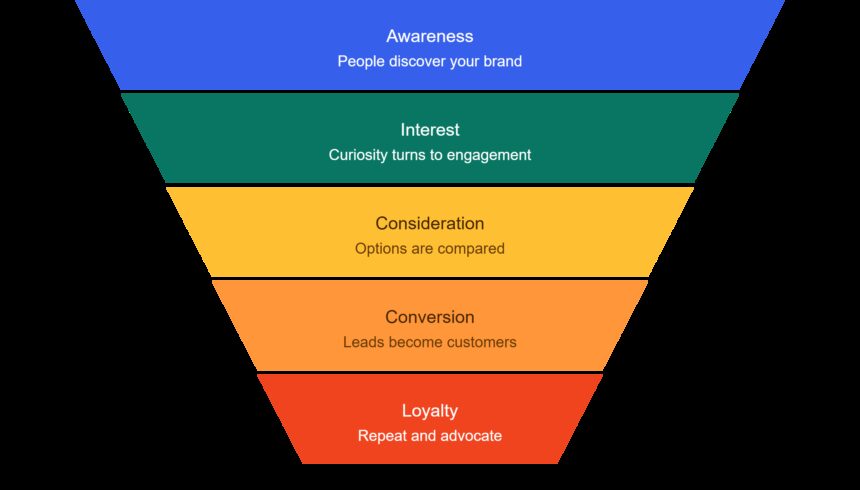
This doesn't automatically mean a substantial budget is needed. It is about a phased and strategic approach, prioritising actions based on what the customer insights tell us.
Brand messaging and strategy
Before investing and putting marketing out into the world, you need to make sure your brand is up to the test. Think about the brands you love and engage with the most – it feels tailored to you, it's always consistent (and has invested in its logos and available colour palette), and you are entirely clear on the USPs and what they offer that no one else does.
Consider taking a more detailed look at what drives the behaviours and actions of your customers or clients. Taking a behavioural science viewpoint at the start of your journey can reveal ways of communicating and approaching your audience that differentiate you from the competition. That will be much more efficient in convincing them to make a change - often the first step needed in them trying and becoming loyal to a brand.
Consider your business values and whether these are clear enough for external communication and to build employee advocates who will also take your messaging out to the world. Values are often connected to ESG and this is something that is more commonly expected for both B2C and B2B.
SEO and PR deliver brand loyalty
Customers are going to find it difficult to build a relationship with your brand if you aren’t consistently visible. Whether it’s at the top of Google or Bing, being found for the exact prompts in voice or AI search, or being positioned correctly in the most relevant publications, SEO and PR are an essential driver of brand loyalty. It’s essential for the awareness stage of the marketing funnel but it’s also your chance to regularly deliver those brand messages that speak to the heart of what you do better than anyone else.
Brand loyalty through social media
People want to connect with others - and social media is all about connection on a personal level. That can be appealing to trends and humour on Instagram, or the development of personal brands on LinkedIn.
The importance here is in credibility and trust signals. Customers are more likely to be loyal to people that start to trust and can see demonstrable morality and competence.
How do you measure brand loyalty?
With the constant evolution of digital marketing and PR, there are increasing ways to measure the success of brand loyalty. We’ve discussed in our other blogs the importance of avoiding vanity metrics and the value of using a collaborative evaluation framework such as the one championed by AMEC to guide measurement and ensure it has meaning.
Alongside the marketing measurements of brand loyalty, including brand recall, perception, prominence, conversion rates and more, there are more data-based metrics which require an established and integrated CRM.
These metrics include repeat purchase rates, customer retention rates, engagement or purchasing frequency, and use of referral or loyalty schemes. Net promoter scores and customer satisfaction scores can also provide an indication of brand loyalty.
Hopefully, this article has proven the value of brand loyalty – that it’s not a nice to have and it’s also not only for the biggest brands on the planet. Brand loyalty is in essence about having and communicating clearly your defining selling point and seeing that through to product quality or service experience. Brand loyalty equals greater referrals which means easier sales and better profitability – who wouldn’t want that?
Frequently asked questions
What is brand loyalty?
Brand loyalty is a consistent and repeated choice to choose a product or business over the competition. This choice is driven by trust rather than on cost.
How do I build brand loyal customers?
Warming a cold contact or enquiry into a loyal and repeat customer takes multiple marketing touchpoints and engagements. Having a strategic marketing plan, based on insights, that is fed into a CRM and sales process is essential.
What causes brand loyalty?
The basis of brand loyalty stems from delivering dependable product quality or experience to create trust.